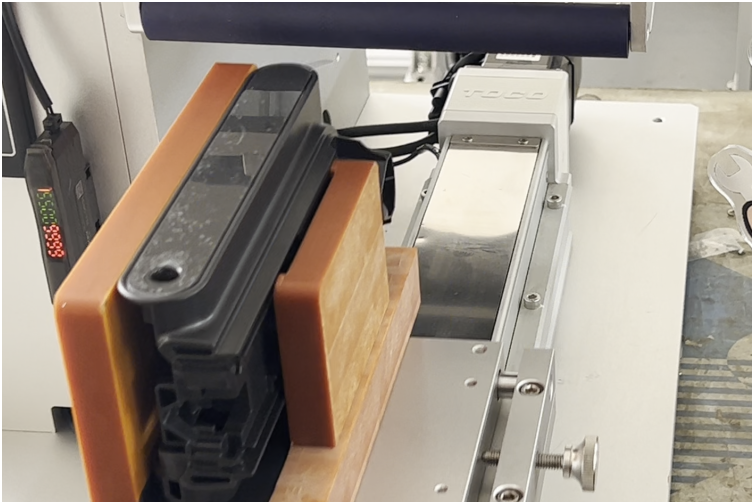
In market where small batches and multiple varieties are the norm, the biggest waste on production lines is often the "switching line time". Traditional automated film application relies on precise tooling fixtures to position the products. Every time a new model is introduced, it means redesigning, processing, and debugging the tooling, which is time-consuming and labor-intensive, and has extremely poor flexibility.
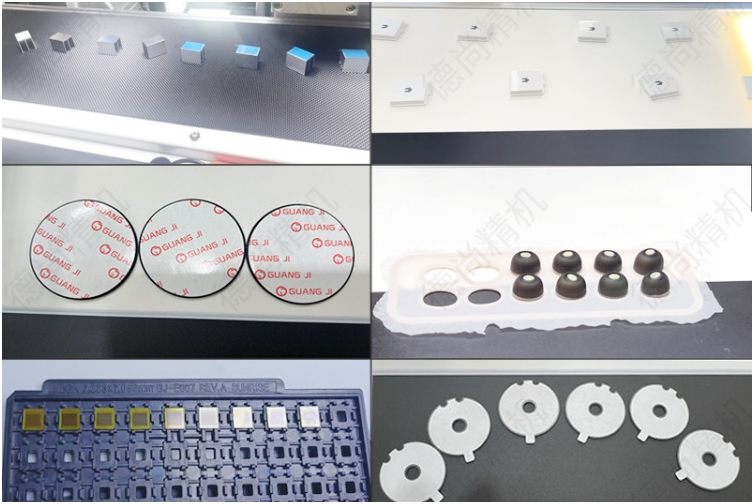
In various manufacturing fields such as consumer electronics, new energy auto parts, and precision plastics, small batch and multiple varieties have become an irreversible market trend: On one hand, there is an explosion of customized demands from customers, and the proportion of short orders and urgent orders continues to increase; on the other hand, the speed of product iteration is accelerating, and the production lines need to frequently switch models. The biggest waste of the production line is no longer idle capacity but the lengthy time for line switching and production transfer.
The traditional automatic film-lamination production line is fundamentally incompatible with this new production mode: The traditional film-lamination equipment highly relies on precise tooling fixtures to complete product positioning. Every time a new product model is introduced, it means having to redesign the fixture drawings, outsourcing processing, and on-site installation and debugging. The entire process takes at least one or two days, and in some cases up to three to five days. This not only disrupts the production plan but also incurs considerable costs for fixture manufacturing and storage. The flexibility is extremely poor, and many factories have directly missed orders due to the slow production turnaround time.
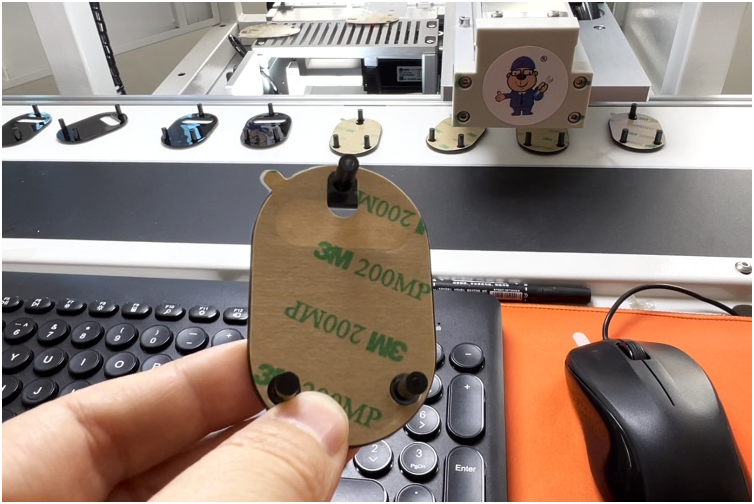
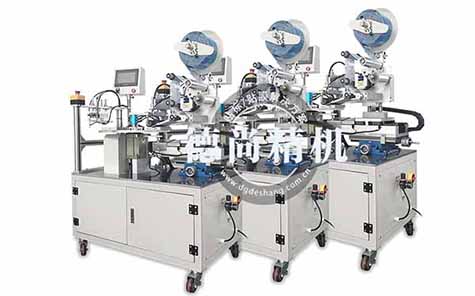
The emergence of the CCD visual laminating machine has fundamentally overturned this traditional model. Its revolutionary breakthrough is the "no-jig" visual positioning technology, which completely transforms the production transfer from complex physical modifications to simple program switching. How is it achieved? By relying on the built-in high-definition and high-resolution industrial camera, the machine can capture real-time images of randomly placed products. The built-in AI intelligent algorithm can instantly identify the product outline, locate the feature points, instantly calculate the actual position and angle deviation of the product, and directly command the laminating head to dynamically adjust its position to complete precise laminating - the entire process does not require any physical jig or fixture at all. The core cost of production transfer in the design phase has been completely eliminated.
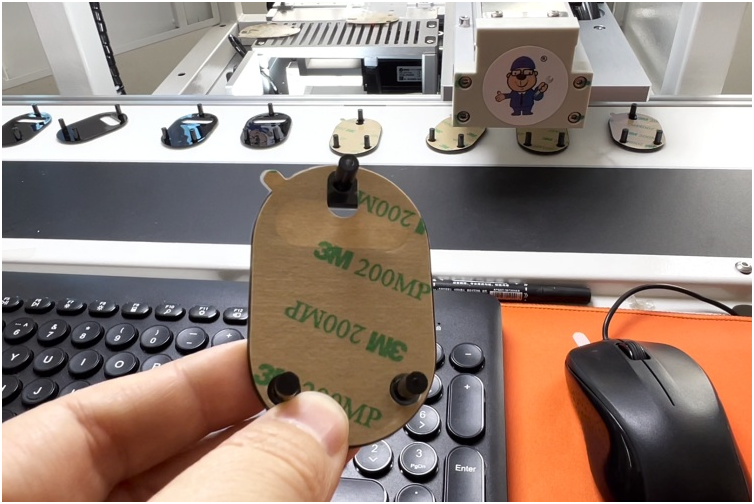
The CCD visual laminating machine fundamentally changes this model. Its revolutionary aspect lies in the "no tooling" visual positioning. Using a high-resolution camera, the machine captures real-time images of the products, and intelligent algorithms instantly calculate the precise position and angle, directing the laminating head to perform precise adhesion. This means that when switching from one product to another, there is no need to design, manufacture, or replace any physical tooling.
Switching production is swift as lightning.
Your production plan can be more flexible and dynamic. In the morning, you produce square trays, and in the afternoon, you switch to producing round lenses. For the visual aligner, it's as simple as calling different visual program files. Usually, the switch can be completed within a few minutes, achieving "swift and flexible" production. This provides a strong guarantee for handling short and urgent orders.
Precision and efficiency remain outstanding.
While achieving ultimate flexibility, you don't have to compromise. The ±0.1mm film alignment accuracy and 2 seconds per sheet attachment speed remain consistent, ensuring that every product in multi-variety production is of high quality.